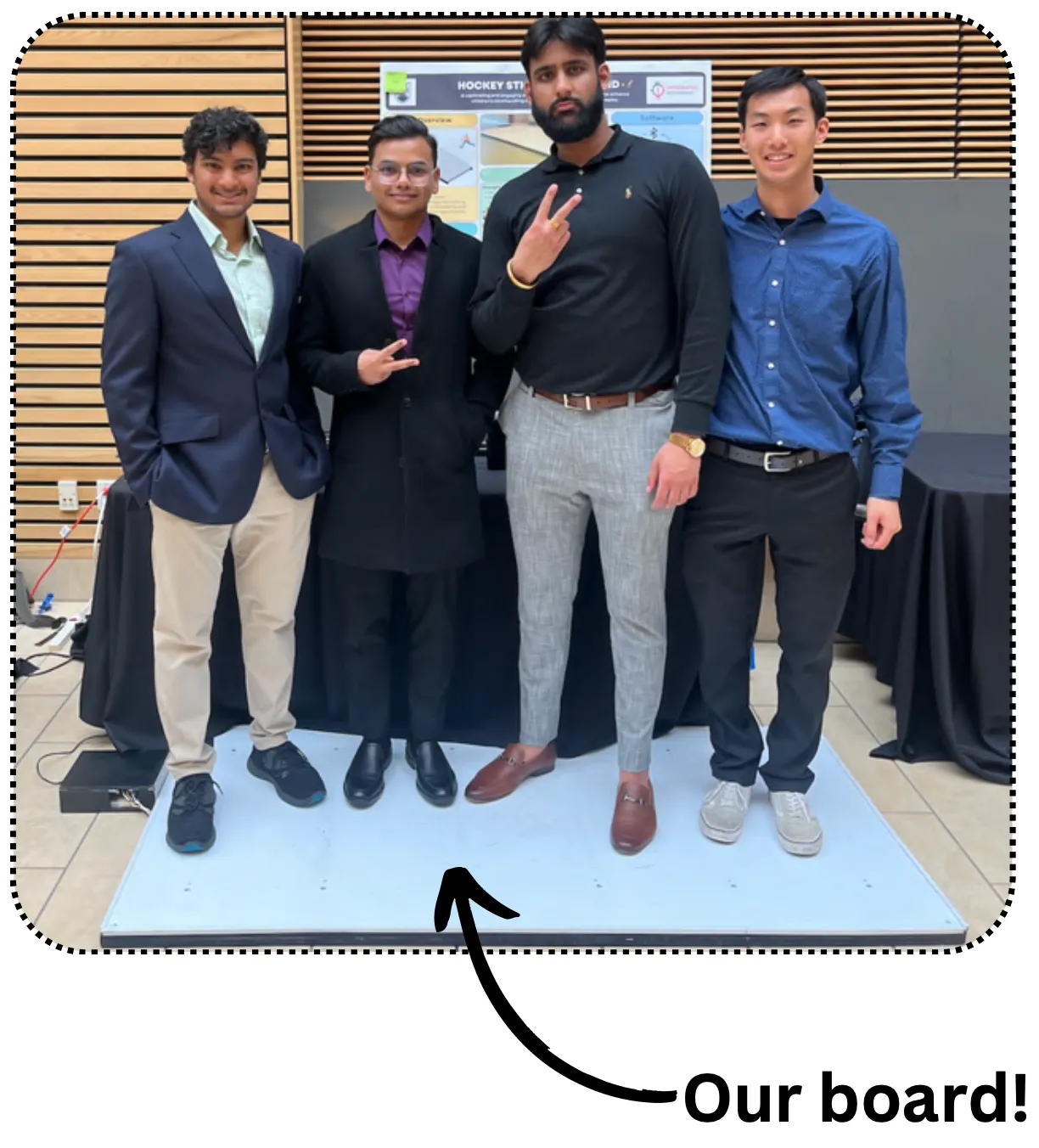
UBC Integrated Engineering capstone · September 2023 – March 2024
Programmable hockey stickhandling board
- Embedded systems
- ESP32
- Web Bluetooth
- Mechanical design
- Challenge
- Make puck-handling practice engaging and affordable for young hockey players.
- Solution
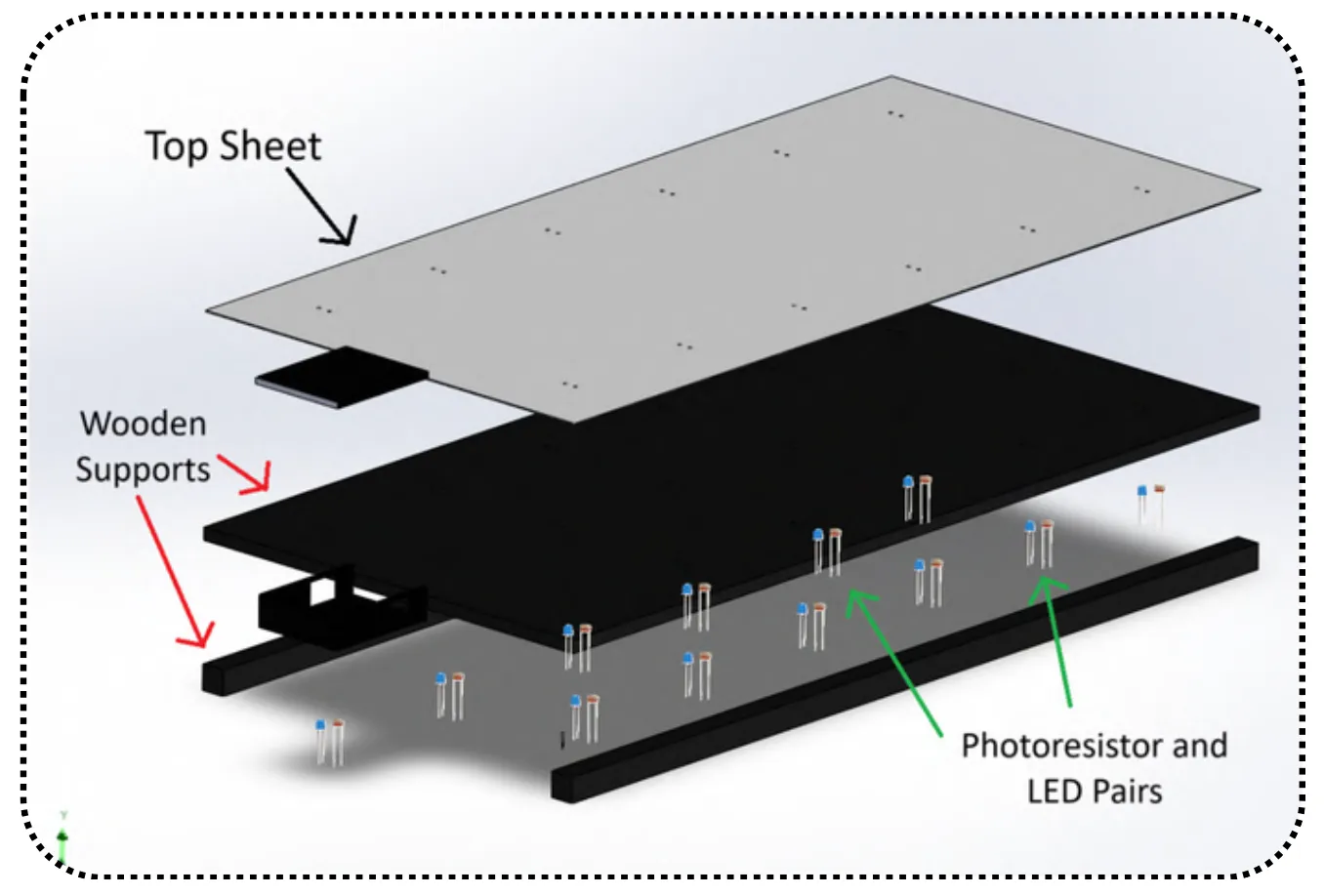
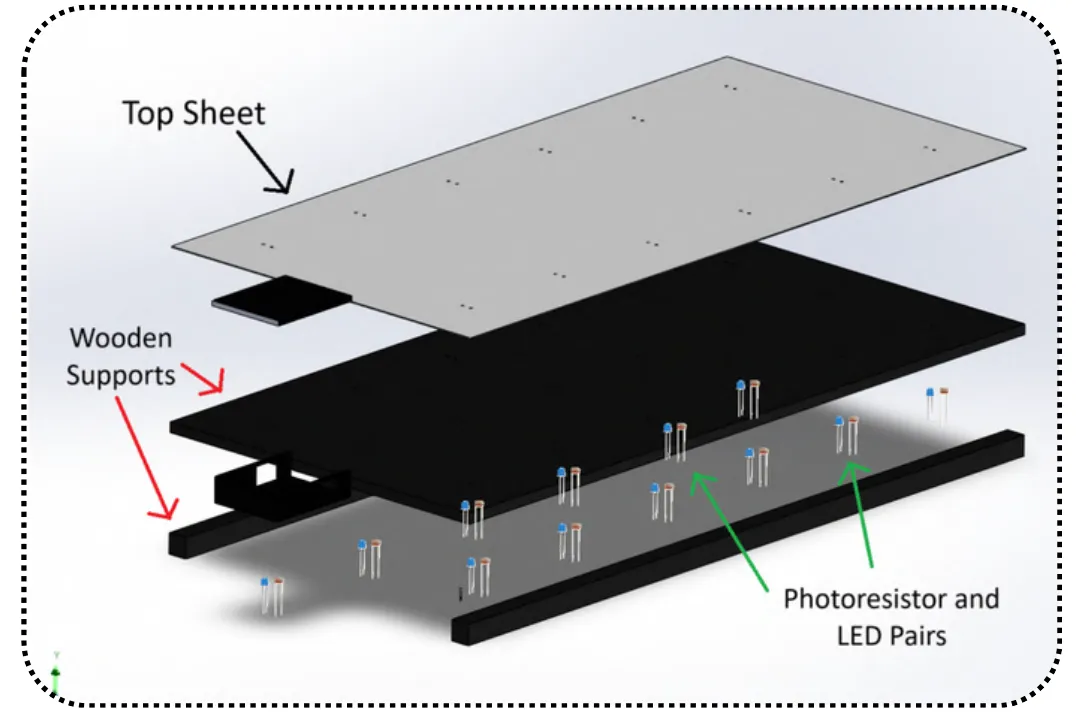
- A 6 by 3 ft board with 12 optical puck sensors, an ESP32 controller and a Web Bluetooth interface with three game modes, engineered to carry a person’s weight.
- Result
- Met every stakeholder requirement in testing; a fellow student asked to keep it for her sister.
Problem
Skill training for young hockey players is costly and inaccessible, and existing games such as air hockey or video games do not build real-world skills. The training that does exist is repetitive enough to put players off. The capstone team built something that kids would want to play and that develops their ability to manoeuvre a puck.
Electrical system
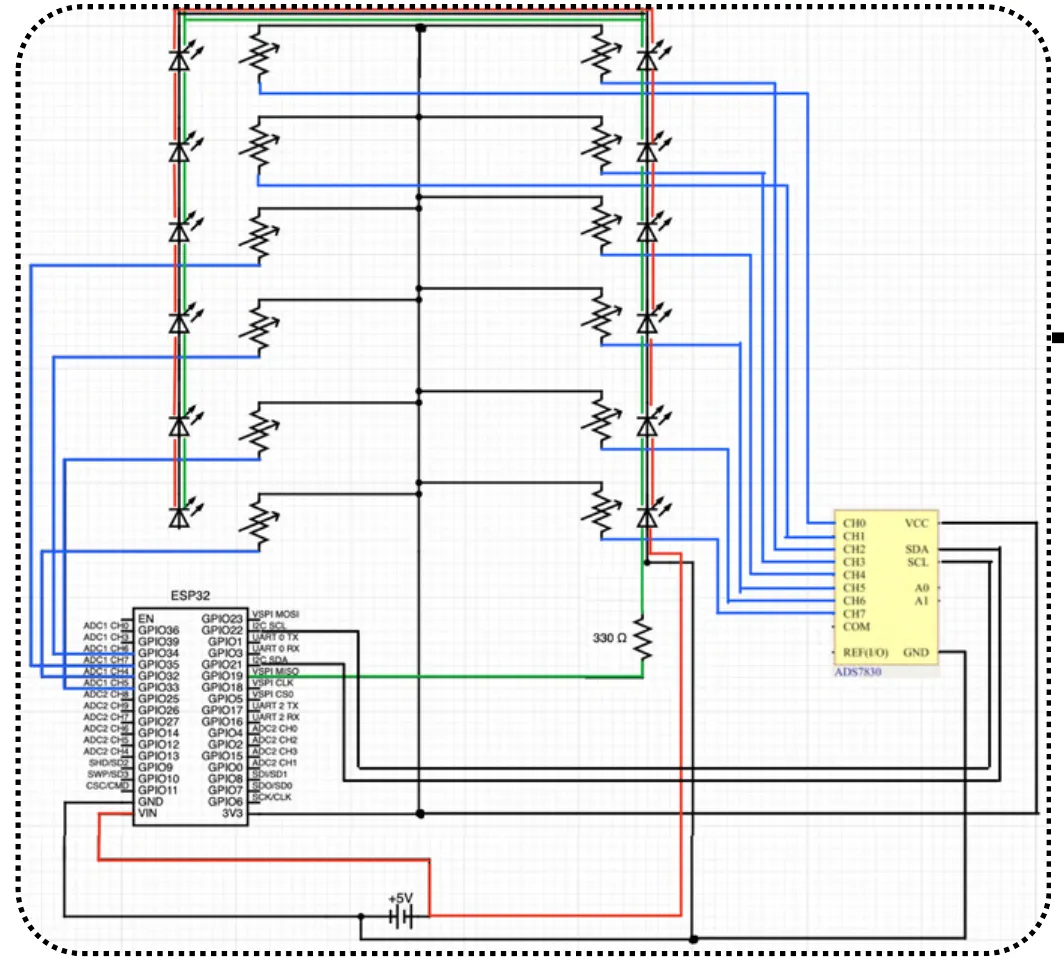
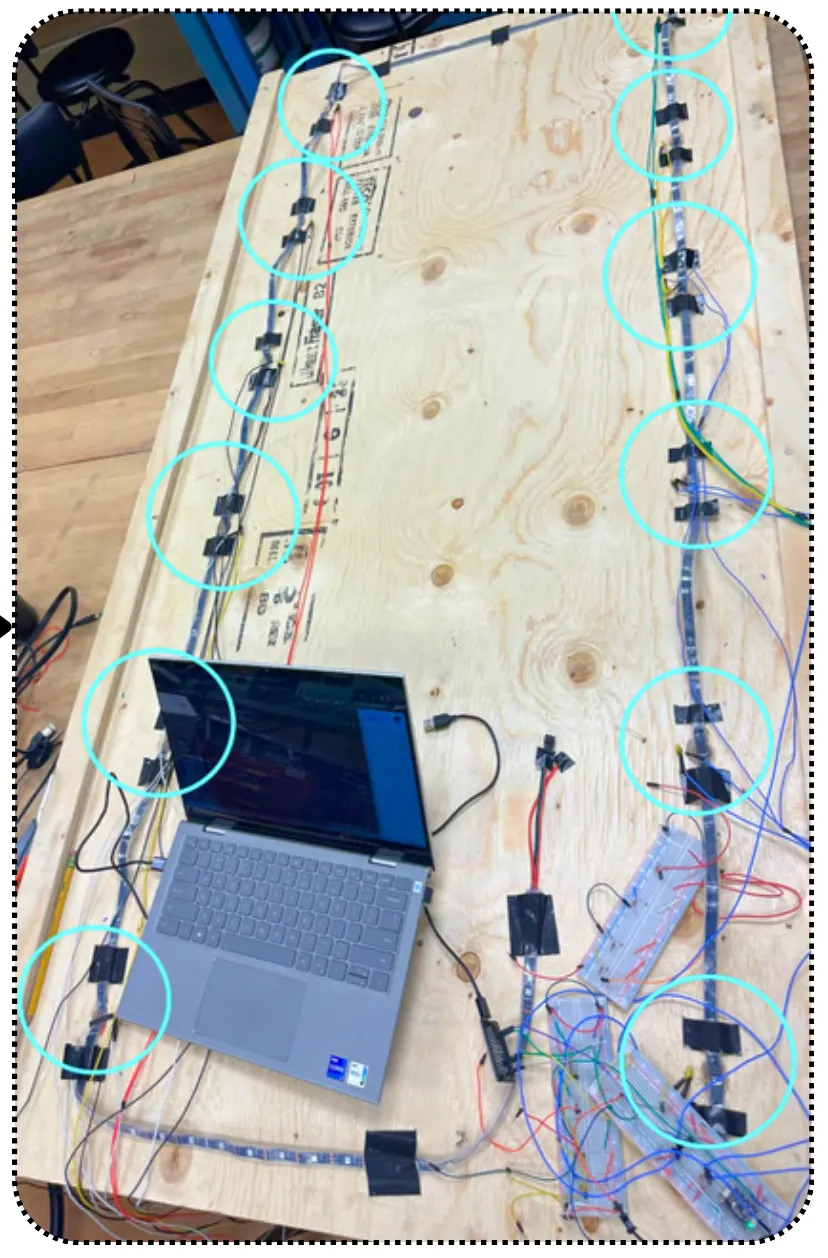
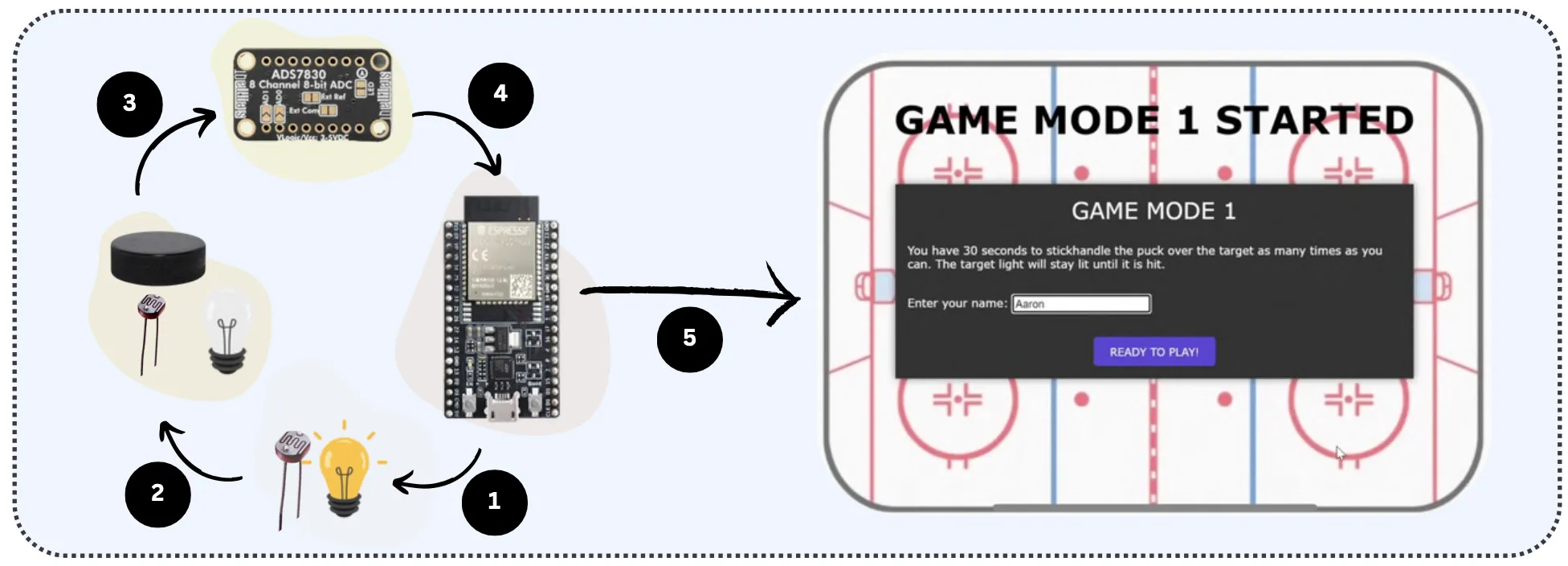
An ESP32 handles Bluetooth and the game logic, an ADS7830 analogue I/O extender fans in the sensor signals, and 12 LED and photoresistor pairs placed across the board detect the puck passing over them.
Sensing
Each photoresistor registers the change in reflected light when the puck crosses its LED, so the system tracks puck movement in real time. This grid is the basis for every game interaction and score.
Software
A single-page web app uses the Web Bluetooth API to select game modes and show scores; the game logic itself runs in C on the ESP32. Three modes were built, and cycle times were tuned so that the LEDs respond instantly to the player.
Mechanical design
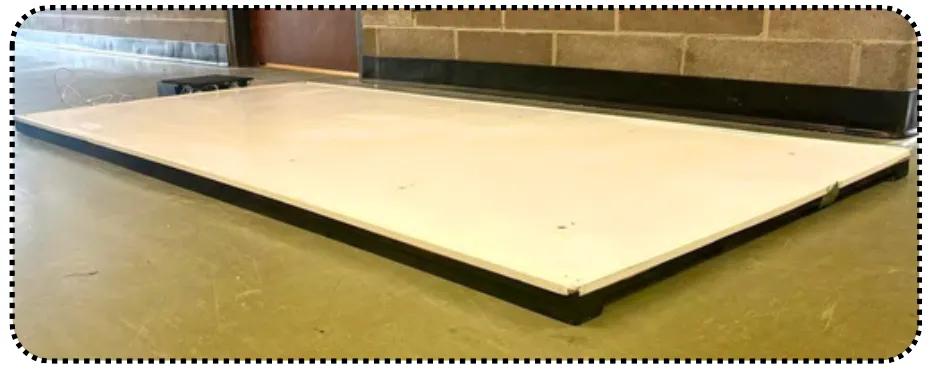
Three requirements drove the structure: carry a person’s weight at the weakest point, give the puck a low-friction surface, and protect the electronics. Material selection, finite-element analysis and physical testing met all three.
Result
The finished board met every stakeholder requirement and survived stress testing, including team members standing on it. A fellow student asked to keep it for her hockey-playing sister, which was as good a sign of fit as the team could have hoped for.